
Consistency Is a Leadership Decision
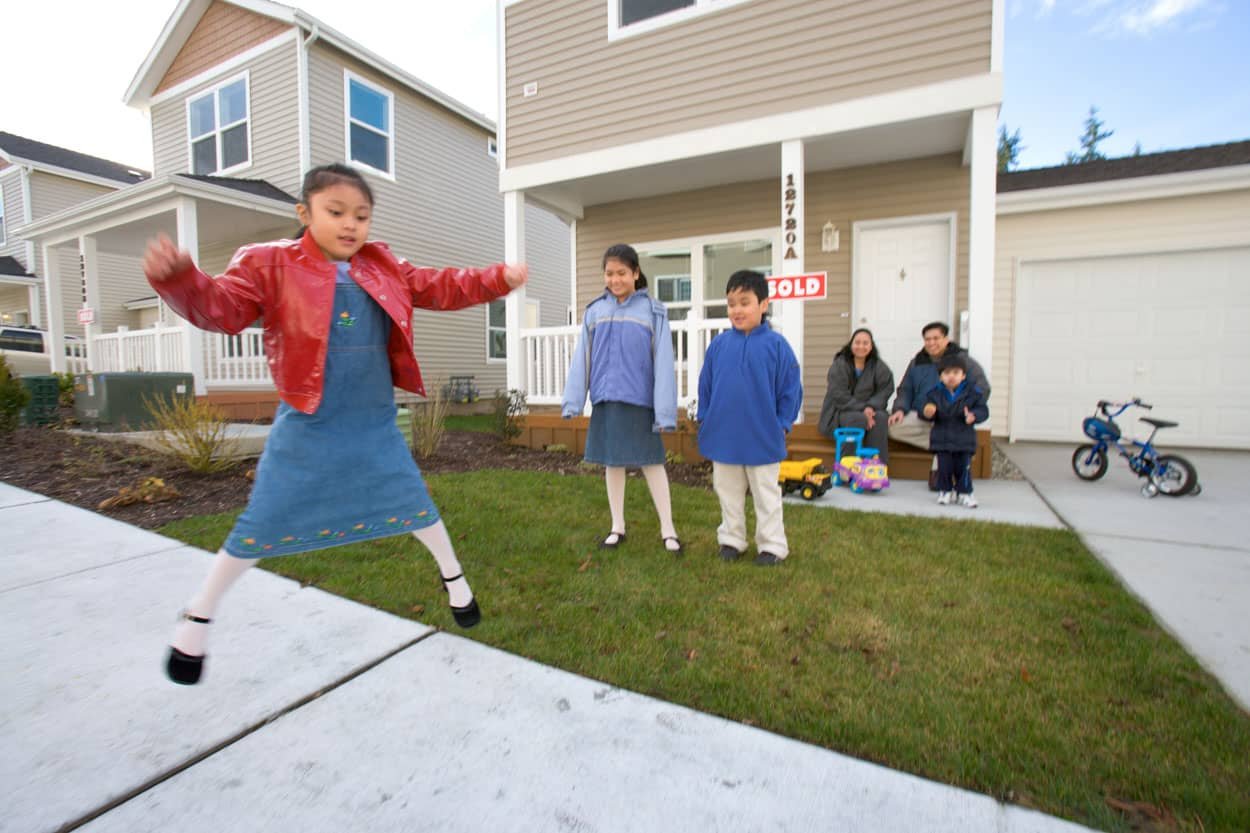
Seattle neighborhood portrait, created for a 2004 national annual report project. One of many stories unified by a consistent visual approach.
How visual consistency in brand photography builds long-term trust across markets
It is easier than ever to hire a photographer.
Today, you can search a city, review portfolios in minutes, and book someone quickly. Twenty years ago, companies often worked through agencies to locate photographers in different markets. Now the entire process lives online.
On the surface, that looks efficient.
But the easier it becomes to hire different photographers in different places, the harder it becomes to protect a consistent visual narrative.
I learned that lesson early in my career.
A National Annual, One Visual Language
Nearly twenty years ago, in 2004, I was hired to photograph a national annual report for Fannie Mae. It was a multi-city assignment documenting homeowners across the country. For close to two months, I was on the road almost every week, moving from airport to rental car to hotel and into neighborhoods I had never seen before.

Crossville, Tennessee, 2004. Part of a multi-city annual report assignment photographed with a unified visual approach.
The goal was simple on paper. Photograph real families in their homes and create environmental portraits that supported the organization’s message.
In previous years, a different photographer had been hired in each market. The work itself was strong. The photographers were talented. But when the publication came together, the tone shifted from page to page. The light felt different. The compositions varied. The emotional energy moved around.
It did not feel like one connected story.
That year, the approach changed. One photographer traveled to every city. One visual language shaped the portraits. One consistent way of engaging families and approaching each frame guided the project from start to finish.
When the annual was released, the difference was noticeable. The publication felt unified. The pacing was steady. The imagery supported the message instead of competing with it. It felt intentional.
The Seattle Assignment
One assignment from that project still stands out.
In Seattle, I had been told we would likely photograph indoors. It rains constantly, I was told, so it would be safer to control the environment. I arrived a few days early and, sure enough, it rained every day. Gray skies and steady drizzle.
On the day of the portrait, the weather shifted. The clouds opened and the light softened across the neighborhood. Instead of staying inside, we stepped out. We photographed the family in front of their home, allowing the street and surrounding houses to become part of the story.
An hour later, it poured again.
That decision shaped the tone of that spread in the annual report. More importantly, because the visual approach remained consistent across every city, the image felt aligned with the rest of the publication. It did not feel like a stylistic departure. It felt like part of a larger narrative.
My style has evolved since 2004. Technology has changed. The way images are distributed and consumed has changed dramatically. But the principle behind that project has stayed with me.
Consistency is not about limiting creativity. It is about protecting a brand’s visual language. It is about maintaining a clear visual narrative that supports the message instead of competing with it.
Why Consistency Matters More Today
Today, it is common for organizations to hire different photographers in different markets. It is fast. It is convenient. In many cases, it works well for isolated campaigns.
But over time, small shifts in interpretation accumulate. Lighting preferences vary. Direction changes. The emotional tone subtly moves. What begins as flexibility can slowly become fragmentation.
Consistency requires intention. It requires asking how images will live across platforms and over time. It requires understanding not just how to create a strong photograph, but how to create one that aligns with what came before and what will follow.
Consistency Builds Trust
Good photography captures attention.
Consistent photography builds trust.
Trust is built through repetition, alignment, and clarity. It is built when audiences recognize a visual language and feel grounded by it.
Consistency does not happen by accident. It is a leadership decision.If your organization operates across multiple markets and wants to protect its visual consistency, I’m always open to a conversation.