Visual Narrative, Then and Now

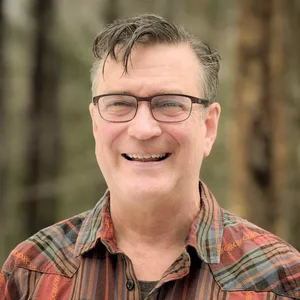
Candid moment during a recent project in Cleveland, Ohio, where I captured both photography and video for a founder pitch Boot camp workshop.
Visual narrative has been part of my brand for more than ten years, but the idea started long before it ever became a tagline.
In the 1980s, I was learning BASIC, one of the early computer programming languages, in grade school. Through high school and into college, I worked in multiple computer languages. Logic, structure, and systems were how I understood the world.
For my high school graduation, my parents gave me a camera.
I remember feeling, very genuinely, like I was going to change the world with it.
At the time, I was studying computer science engineering in college. Once I started taking photojournalism classes, something shifted. The more time I spent behind the camera, the more I realized I was less interested in writing code and more interested in telling stories about people.
Eventually, I changed my major from computer science engineering to photojournalism. That decision shaped everything that followed.
Early on, I learned something simple and foundational. If you want to tell a story visually, you need a wide shot to establish context, a medium shot to show interaction, and a tight shot to capture emotion or a detail of what is going on. You have to walk into a space, read the room, and build the story one frame at a time.
More than thirty years later, I still think that way.
Visual Narrative in Photography
When I photograph people, I am not chasing perfection.
Yes, I will pose someone and give direction. That part matters. But the photograph I am really waiting for usually happens in between those moments.
The unguarded moment.
It is the split second when someone drops the pose, relaxes, or forgets the camera is there. That is when personality shows up. That is when the image starts to feel honest.
When I am creating portraits, I am not trying to manufacture a version of someone. I am paying attention to who they are in that moment. That approach applies whether I am photographing a business owner, a leader, or someone who feels uncomfortable in front of the camera.
Other projects require a more constructed approach, but the intent is still the same. The moment has to feel believable.
Those in-between moments are where the story lives.
Visual Narrative in Video
Video works the same way.
One of my core beliefs is that the more someone memorizes a script, the less authentic it feels. You can usually see it. They are running lines in their head instead of connecting.
I approach video more like a conversation. We talk. We pause. We reset if needed. I want people speaking from the heart, not delivering something perfectly.
When that pressure drops, something changes. Their voice settles. Their expressions soften. The viewer feels that immediately.
Just like photography, the strongest moments in video often happen between the planned parts.
Where Teleprompters Fit In
There are absolutely situations where a teleprompter is the right tool.
Regulatory content, compliance messaging, legal language, and sensitive internal communications often require precision. In those cases, accuracy matters more than spontaneity.
Even then, the goal stays the same. I want the delivery to feel human.
That means adjusting pacing, breaking scripts into natural sections, and helping the speaker sound like themselves, even when every word matters. A teleprompter does not have to feel stiff. It just needs to be handled with intention.
The difference is not the tool. It is how the message is delivered.
When the Story Is Bigger Than the Person
There are projects where the focus is not the individual at all. Compliance work is a good example.
In those cases, I may be working with a professional actor. The goal is clarity, tone, and accuracy. But that does not mean the moment should feel staged.
If I need an actor on the phone having a serious conversation, I am not going to ask them to simply hold a phone and strike a pose. That image will always feel hollow.
Instead, we start at the beginning. We walk through the scenario. We script the conversation if needed. I want them to feel the weight of that moment. Because what someone feels is what they project emotionally.
Once that happens, the body language changes. The expression changes. The image becomes believable.
Even when the end result looks simple, the process matters. I would rather build the moment than fake it.
A Recent Example Close to Home
I recently worked on a video featuring a small business in Providence. On the surface, it was a promotional piece connected to Goldman Sachs 10,000 Small Businesses in Rhode Island.
But the real story was about growth.
The business completed the program, developed a growth plan, and put it into action. They expanded. They evolved. And they were genuinely excited about what they had built.
Instead of scripting them heavily, we asked simple questions. Why they started the business. What they loved about it. How the program helped them think differently.
They were high-energy people who believed in their work, and that came through on camera. In one project, you had multiple narratives working together. A Rhode Island small business. A growth journey. And a program designed to support that progress.
That kind of layered storytelling is what I care about.
Why I Still Call It Visual Narrative
A lot of people use the phrase visual storytelling now, especially in marketing. I understand why.
I still prefer visual narrative.
If you’re curious how I distinguish between visual narrative and visual storytelling in more detail, I wrote about that previously in a post on the craft behind authentic corporate imagery.
To me, it means paying attention. It means understanding context. It means letting people be human and trusting that their story is enough.
That belief started decades ago when I was learning how to tell stories frame by frame. It has carried through photography, video, and every project since.
And it is still how I work today.