Finding the Human Story: Producing the 2026 Community Leader Award Film in Kansas
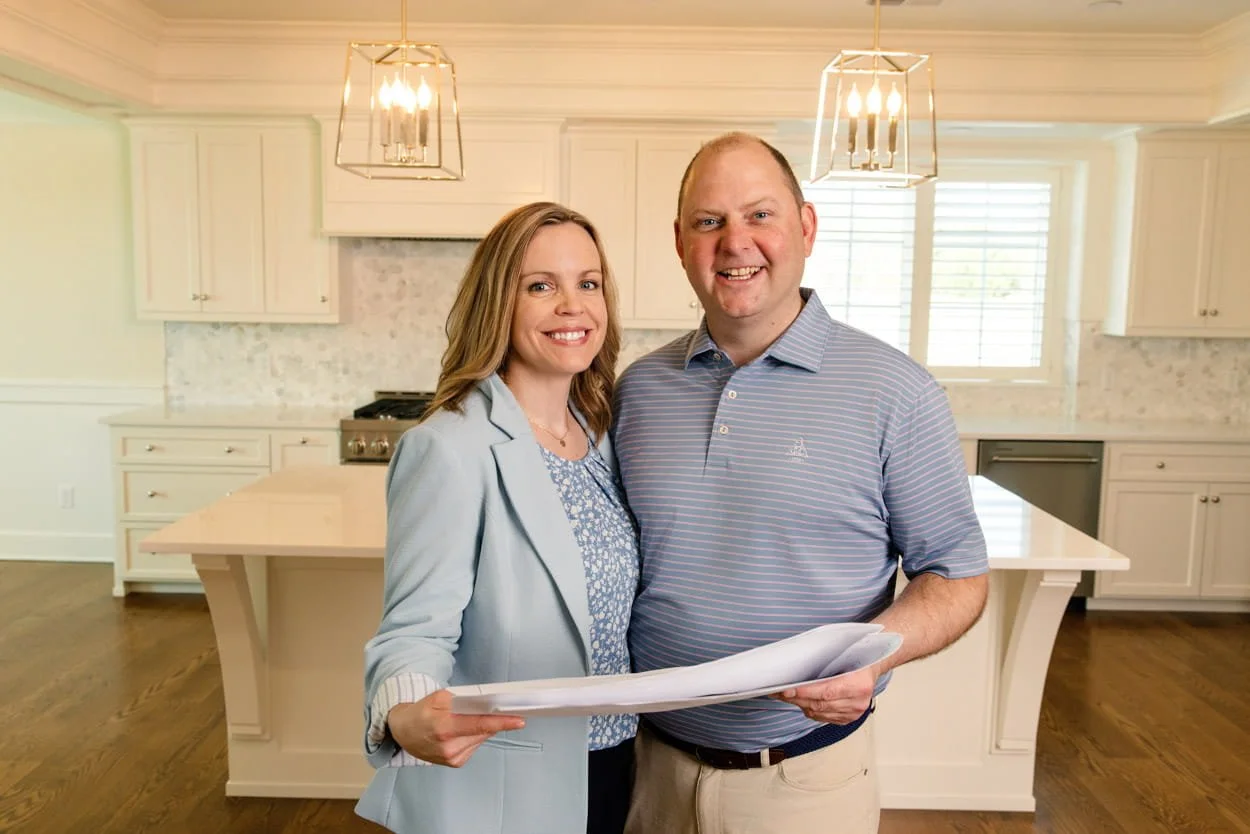
Housing and development became an important part of the story while documenting Mid-America Bank’s community impact in Lawrence, Kansas.
Some projects begin with a very clear story. Others begin with a client, a group of people, a series of locations, and an idea of where the story might lead.
Then you start listening.
That was very much the case when FHLBank Topeka asked me to produce its 2026 Community Leader Award film featuring Mid-America Bank.
I've produced more than a dozen Community Leader Award stories for FHLBank Topeka over the years. Each one has taken me into a different community and introduced me to people whose lives and work intersect in ways that aren't always obvious at the beginning.
For this project, we traveled to Kansas and spent several days working across Baldwin City, Gardner, and Lawrence. There were approximately 16 people to interview, numerous locations, businesses, homeowners, builders, nonprofits, schools, community organizations, photography, video, drone footage, and a lot of ground to cover.
The finished film would eventually run nearly 15 minutes.
But before we could make a film about Mid-America Bank, I felt we first needed to understand the communities around it.
A Community Story Before a Bank Story
One of the decisions I made early was that I didn't want the film to be dominated by people sitting in offices explaining banking.
Mid-America Bank was receiving the 2026 Community Leader Award, but what did that recognition actually look like beyond the walls of the bank?
That question took us into the communities.
We met a bakery owner in Baldwin City. We talked with homeowners, builders and developers. We visited affordable senior housing. We heard from educators and nonprofit leaders. We talked about recreation, schools, residential development, first-time homeownership, local businesses, and what makes people want to put down roots in a community.
The bank was present throughout those stories, but it didn't always need to be physically at the center of the frame.
That became an important part of the visual narrative.
FHLBank Topeka works with financial institutions such as Mid-America Bank. Mid-America Bank, in turn, works with homeowners, businesses, developers and organizations within its communities. By following those relationships outward, we could show the impact rather than simply explain it.
In many ways, the structure became:
FHLBank Topeka → Mid-America Bank → local organizations and people → community.
That gave us a much more human story to tell.
Watch the 2026 Community Leader Award Film
The finished film moves through Baldwin City, Gardner and Lawrence while connecting stories about housing, business, education, nonprofits and community investment.
You Can Plan a Production. You Can't Completely Plan the Story.
Pre-production on a project like this is substantial.
We knew who we were interviewing. We knew where we needed to be. We had schedules, locations, potential themes and questions. A four-person crew was moving through multiple communities, so there was plenty that needed to be organized before we arrived.
But I don't like deciding exactly what someone is going to say before I interview them.
The conversations were intentionally conversational. Typically, we allowed around 90 minutes at a location for setup, the interview or conversation, environmental photography or footage, and teardown.
That breathing room matters.
When someone isn't trying to remember a script or deliver the perfect sound bite, you have a better opportunity to hear what actually matters to them. And when you do that with enough people, patterns begin to emerge.
On this project, one of those patterns was housing.
When Housing Became the Thread
Housing was always part of the project, but I don't think I fully appreciated how important it would become until we were well into the interviews.
People kept coming back to it from different directions.
There was the need for entry-level housing and places for growing families. There were builders and developers trying to respond to demand. There was affordable senior housing in Baldwin City. There were homeowners talking about what owning a home meant to their family. There were conversations about development in Lawrence and about younger families establishing roots in Gardner.
And there was FHLBank Topeka working behind the scenes with Mid-America Bank through programs that could support some of those efforts.
Dave Hill of Mid-America Bank gave us a simple observation that helped connect much of it:
“The key to having a good housing market is to be in a place where people want to live.”
That idea reaches far beyond housing.
Why do people want to live somewhere?
Good schools matter. Local businesses matter. Recreation matters. A healthy downtown matters. Nonprofits and community organizations matter. Housing matters.
Suddenly, subjects who had been interviewed separately were contributing to the same larger conversation.
That's one of my favorite parts of interview-driven filmmaking. One person can begin a thought without knowing that someone we interview the next day will help complete it.
Building the Visual Story Around the Interviews
Interviews gave us the foundation, but they couldn't carry a film of this length on their own.
We needed to see these places.
Throughout the production, we filmed and photographed downtowns, neighborhoods, businesses, homes, developments, community organizations and the people who bring those places to life. We used aerial cinematography to establish a larger sense of place. Inside businesses and organizations, we looked for activity and interaction rather than simply collecting static establishing images.
Some of that was carefully planned.
Some of it wasn't.
I've always believed there needs to be enough structure to get the work done and enough flexibility to recognize something interesting when it happens in front of you.
The same approach carried into the photography. I was creating environmental portraits and still photographs alongside the film production, which gave FHLBank Topeka a broader visual library from the time we were already spending with people and within these communities.
For me, photography and filmmaking aren't separate storytelling exercises on a project like this. They are different ways of observing the same story.
Sometimes You Discover What's Missing After You Leave
Post-production also revealed places where the visual story could be stronger.
Baldwin City is known for community events, including the Maple Leaf Festival, but our production dates couldn't capture everything that makes the community what it is.
I reached out locally to see what might exist.
Monica with the Baldwin City Chamber of Commerce connected me with videographer Peter Wentz, who provided additional footage, including material from the Maple Leaf Festival.
That footage gave us another layer of Baldwin City that we simply couldn't have recreated during our time there.
It's a good example of why I think of post-production as part of story development rather than merely the stage where everything gets assembled.
Sometimes editing shows you exactly what you're missing.
Sixteen Voices, One Film
The biggest editorial challenge wasn't finding good interview moments. We had plenty.
The challenge was deciding how those moments belonged together.
With approximately 16 people, it would have been easy to create a sequence of individual testimonials. One person speaks. Then another. Then another.
I didn't want that.
I wanted the voices to interact.
The edit moved geographically and thematically. Baldwin City helped establish a sense of community, local business, recreation and affordable housing. Gardner expanded the conversation into growth, schools and residential development. Lawrence brought additional perspectives on housing, development and community organizations.
Then we could begin crossing those geographic boundaries when the ideas connected.
A builder could lead into a banker. A banker could lead into a homeowner. A conversation about housing could lead into why schools, businesses and community organizations help make a place desirable in the first place.
The editorial process involved moving sections, refining introductions, identifying missing B-roll, clarifying relationships and continually asking whether someone unfamiliar with these organizations would understand why one story connected to the next.
That is where much of the storytelling happens.
Not behind the camera.
In the relationships between the things people told us.
A Good Community and a Good Bank
One line ultimately captured much of what we had been hearing:
“We've never heard of a bad bank in a good community, or a good bank in a bad community.”
I like that thought because it doesn't place the bank above the community.
It makes them interdependent.
A community bank needs healthy communities. Communities need businesses, housing, organizations and people willing to invest in them. And behind some of those relationships are organizations such as FHLBank Topeka providing resources that may never be particularly visible to the person who ultimately benefits.
That layered relationship was the story we were trying to make visible.
More Than a Finished Film
The main Community Leader Award film runs approximately 14 minutes and 45 seconds, but the project created much more than one finished video.
Alongside the film, I photographed environmental portraits and community imagery, and we created a one-minute trailer and additional short-form material from the larger story.
The one-minute trailer was created from the larger Community Leader Award story, giving FHLBank Topeka and Mid-America Bank another way to share the project with a broader audience.
For clients, there is real value in approaching photography and video together. Instead of leaving a production with one finished piece, we can create a library of visual material that continues working across websites, social media, presentations, publications and future communications.
But the part I find most interesting isn't the number of deliverables.
It's that we arrived in Kansas with a plan, listened to approximately 16 people, and came home understanding the story differently than when we left.
That's why I still enjoy this kind of work.
Planning gets us there.
Listening tells us what the story really is.