When the Camera Turns Around
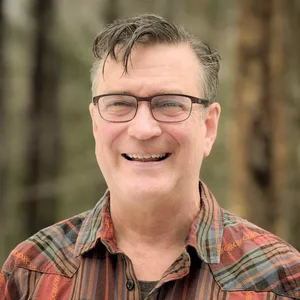
For more than 30 years, I’ve spent most of my career behind the camera.
I’ve photographed and interviewed hundreds of people. I’ve worked with executives, employees, business owners, scientists, students, and people sharing deeply personal stories. And there’s something I’ve told many of them when they’re nervous about being photographed or interviewed:
Speak from the heart.
Don’t worry about saying everything perfectly. Talk to me. Tell me what happened. Tell me why it matters.
Lately, I’ve been spending more time on the other side of the camera.
And I’m realizing that “speak from the heart” is a lot easier to say when you’re the one behind the lens.
Getting comfortable in front of the camera
Being on camera isn’t completely new for me. Years ago, when my REVEALED Project became a book and film, I found myself speaking about it publicly. There was a time when speaking in front of even a classroom made me uncomfortable. Suddenly I was presenting to audiences of more than 100 people.
I joined Toastmasters because I knew it was something I needed to work on. I also experienced being interviewed on camera for a documentary about REVEALED. Little by little, I became more comfortable.
But speaking directly to a camera by myself is different.
I experimented with video reviews and the idea of creating a YouTube channel six or seven years ago. It fizzled out pretty quickly. I didn’t particularly enjoy being in front of the camera, and the process felt cumbersome. I had to decide what I wanted to say, record it, edit it, and somehow turn all of that into something worth watching.
So I stopped.
More recently, I’ve found myself coming back to it.
From teleprompters to bullet points
About four years ago, I created a video introducing myself and Indermaur Media. I used a teleprompter, and even then it took quite a few takes.
There’s absolutely a place for teleprompters. I use them professionally, I’ve seen them help many people communicate more comfortably, and they’ve helped me.
But when I recently decided it was time to update my own bio video, I wanted to try something different. Instead of reading a script, I worked from bullet points.
I knew the material. It was my career, my business, and my approach to the work. Still, looking into a lens and saying it naturally was harder than having the same conversation with another person.
That experience started pushing me toward something I’ve wanted to become better at: shorter, simpler, more conversational video.
Learning UGC by actually doing it
I’m seeing more interest from clients in direct-to-camera content. Sometimes it’s internal communication or training. Sometimes it’s social media. Sometimes it’s a business owner or employee talking directly to the people they serve.
I can produce that kind of work. But there’s a difference between saying I understand the process and actually putting myself through it.
So I started creating short UGC-style videos around products I genuinely use. Often called user-generated content, these are intentionally more conversational and less produced, designed to feel like someone sharing a firsthand experience rather than delivering a traditional commercial.
One of the first was about my GardePro trail cameras. I originally bought them because I wanted to know what was wandering through our 12 wooded acres when I wasn’t there to see it.
The cameras quickly became a bit of an obsession.
Bobcats. Coyotes. Fisher cats. Deer. Raccoons. Rabbits. One deer even walked up and licked the camera.
I realized while making the video that those experiences were much more interesting than reciting specifications. One of the most natural things I said was that when I wake up in the morning, I don’t check social media or the news first. I check my trail cameras.
That was the story.
And I didn’t need a script to invent it because it was true.
Sometimes experience makes simplicity harder
My next short product video taught me something else.
After more than three decades in photography and video production, I know how to add things to a production. Another angle. Another story. More B-roll. More information. Better lighting. Another camera.
With these short videos, I’m learning when not to add something.
I had plenty of good material that could have gone into a roughly one-minute video. I started realizing that including all of it wasn’t making the story better. It was making a simple story more complicated.
So I started taking things out.
That sounds obvious. But when your career has been built around producing things well, it can be surprisingly difficult to deliberately leave good material unused.
I’m learning that it isn’t wasted. Maybe it becomes another video. Maybe it belongs in a longer written review. Or maybe it simply doesn’t need to be used.
More and more, I find myself asking one question:
Does this actually need to be done?
That question applies to the video itself and to everything surrounding it.
My goal is to be able to record a short piece, edit it on my phone, publish it, learn from it, and move on to the next one without turning every 60-second video into a major production.
Letting go of perfect
I think this may be the biggest lesson so far.
I've put projects like this off before. Sometimes for months. Sometimes longer.
I would start thinking about everything that needed to happen before I could make something. What am I going to say? How am I going to say it? How should I film it? What if I stumble? What if the delivery isn't quite right?
I was editing myself before I had even recorded anything.
I'm trying not to do that anymore.
I'm learning that I can look at my notes. I can pause. I can stumble over something and try it again. And sometimes a delivery that isn't absolutely perfect is more believable because it actually sounds like me.
Speaking from the heart doesn't mean speaking without preparation.
It doesn't mean teleprompters are wrong or scripts don't have a place. It means remembering that the purpose of all those tools is to help someone communicate something honestly.
That's what I've asked people in front of my camera to do for years.
Now I'm experiencing more of what that request actually feels like.
Turning the camera around
I'm still learning.
I'm also beginning to bring myself in front of the camera in other parts of my work, including Walk in My Woods, the series I've been writing and photographing for the past two years. That's a larger transition for me, and a story for another day.
What I'm noticing already is progress.
I'm more comfortable than I was a month ago. I'm thinking less about delivering every word perfectly. I'm learning what deserves to be in a 60- or 90-second story and what can be left out. Most importantly, I'm actually making the videos instead of spending months thinking about making them.
And I suspect this experience will follow me back behind the camera.
The next time I sit across from someone who's nervous about an interview and tell them to forget about the camera and simply speak from the heart, I'll understand a little more about what I'm asking them to do.
Sometimes the best way to understand the other side of the camera is to turn it around.