The Frame I Was Hired For
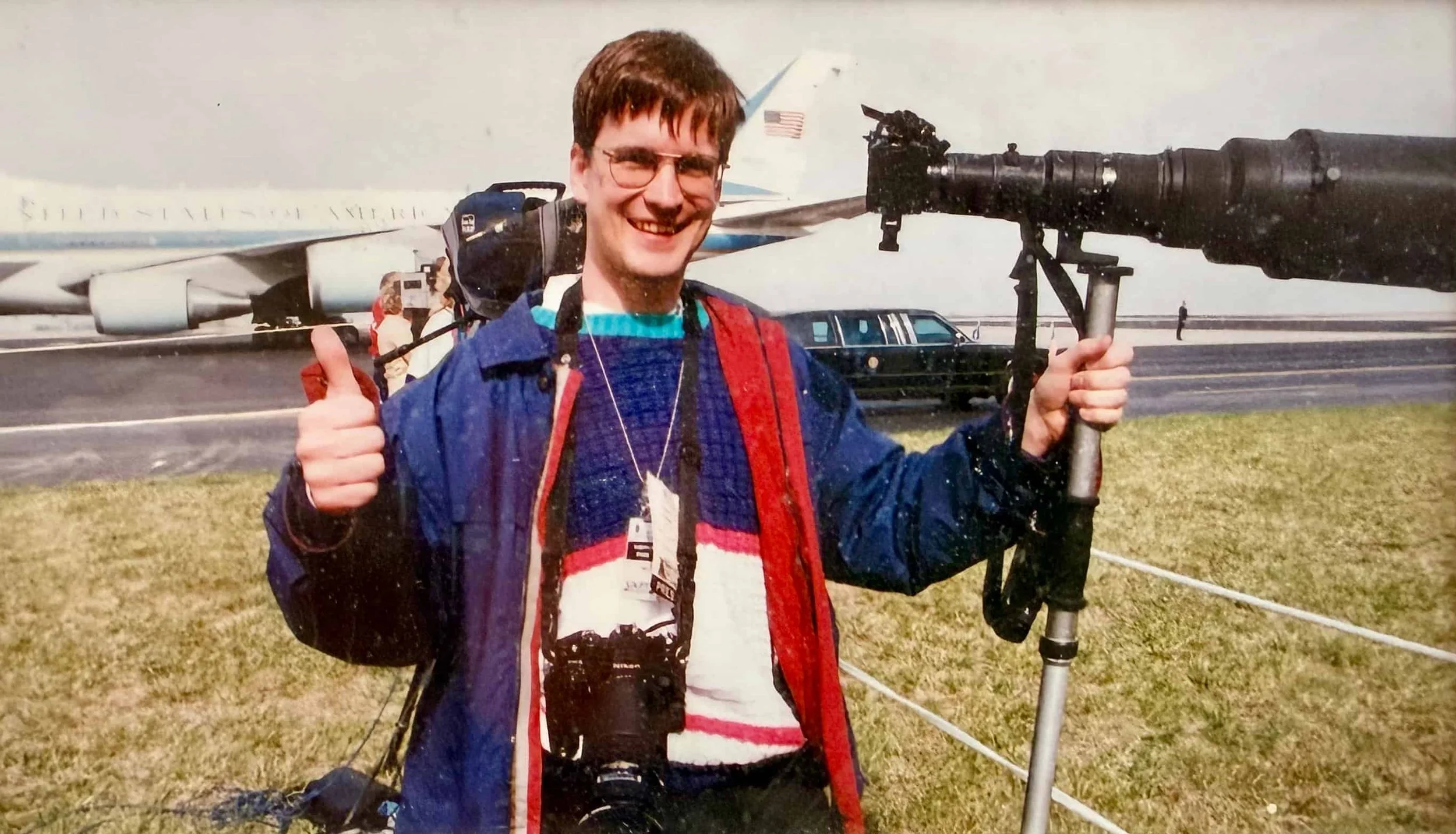
My first presidential press pool assignment in 1994 while photographing President Clinton’s visit to Topeka, Kansas for the Associated Press.
The first time I photographed President Bill Clinton was in 1994 while working for the Associated Press in Kansas.
It was the film days. This was before constant connectivity and instant image delivery. There was no checking the back of a camera, no sending images from the field, and no instant confirmation that you had the shot. You photographed carefully, trusted your instincts, and waited until the film was processed to truly know what you captured.
I was assigned to the presidential press pool during a visit to Topeka, Kansas. My assignment was straightforward on paper: photograph the president boarding Air Force One before departing for Kansas City following a rally being held in a nearby airport hangar. Like most assignments involving a sitting president, access started long before the event itself. My information had been submitted beforehand for Secret Service background clearance before credentials were issued. Even then, security surrounding the president was extensive.
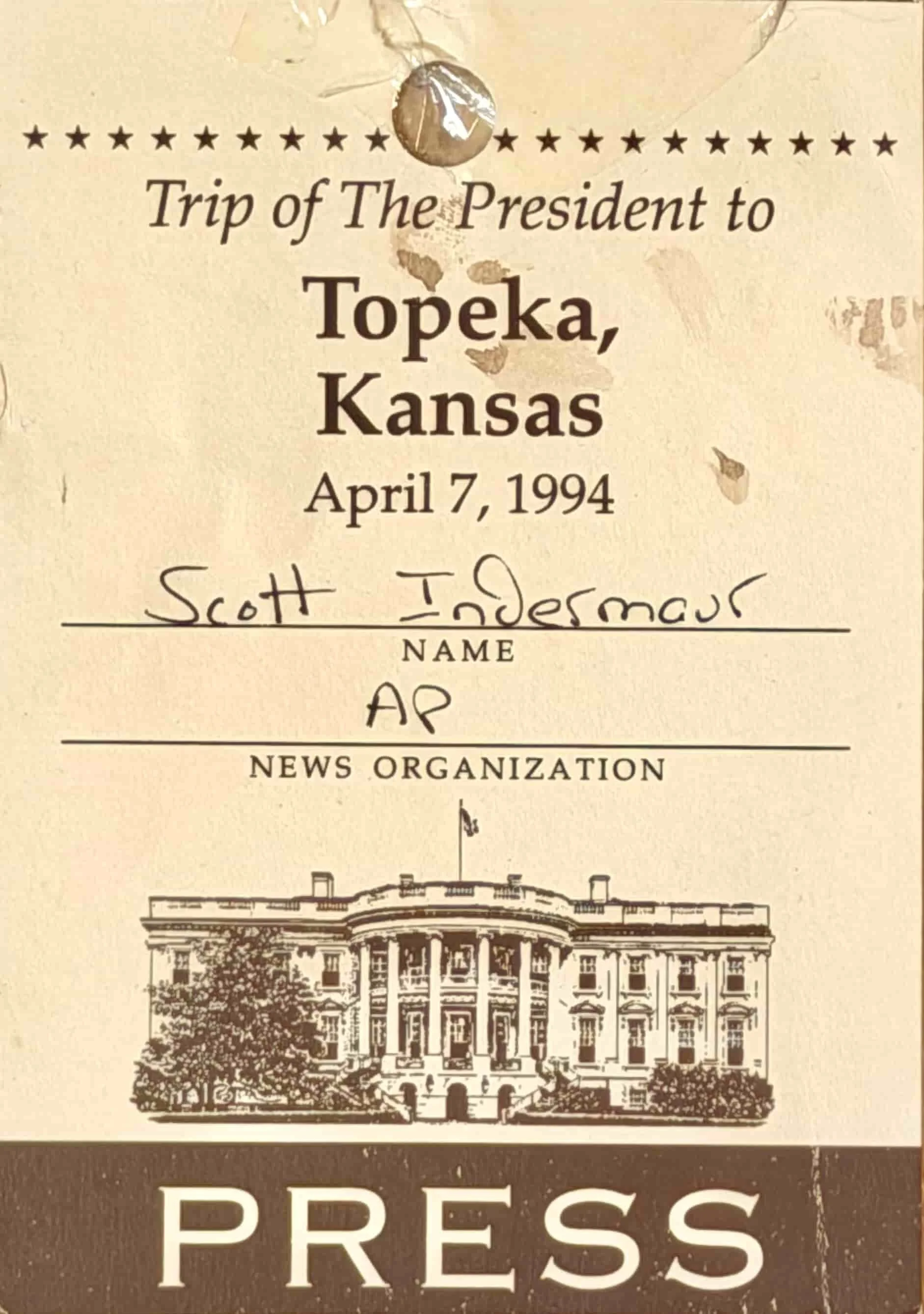
My original Associated Press credential for President Clinton’s 1994 visit to Topeka, Kansas.
The credential itself was surprisingly simple by today’s standards. Just a paper press pass with basic information handwritten onto it. No laminate. No embedded technology. But getting access to the tarmac was another story entirely.
I arrived several hours early and worked through two security checkpoints before finally reaching the designated media area near the runway. There were snipers positioned on rooftops nearby, Secret Service agents constantly moving through the area, and long stretches of waiting where nothing seemed to happen at all. Everything felt controlled, tense, and highly structured.
I had a long telephoto lens mounted and ready, likely a 500mm or 600mm lens, though enough years have passed that I can’t say for certain anymore. What I do remember was the weight of the equipment and the awareness that every frame mattered. A roll of film only gave you 36 exposures. You couldn’t simply shoot endlessly and sort it out later. Every frame had to be considered carefully because you also had to think ahead. The last thing you wanted was to be changing rolls of film during the exact moment you were there to capture.
President Clinton arrived aboard Air Force One earlier in the day for the rally. After photographing portions of the arrival sequence, I was told I could head back toward the event itself and continue photographing from inside the hangar. Another pool photographer was already covering the rally, but I still had access if I wanted it.
I decided to stay where I was.
Part of the decision was practical. I didn’t want to move back through security checkpoints again and risk missing the departure moment later. The goodbye wave from the stairs of Air Force One was the frame I was hired for. That final departure image was ultimately the reason I was there, not fighting my way back into rally coverage that was already being handled by another photographer.
So I waited.
Hours later, after the rally concluded, the movement around the airport began picking up again. Eventually President Clinton walked toward the aircraft and climbed the stairs to board Air Force One. I tracked him through the lens as he reached the top, then he turned back toward the crowd and waved before entering the plane.
That was the frame.
A few moments later, Air Force One lifted off and disappeared into the sky on its way to Kansas City.
My day still wasn’t over. I drove home prepared for the next part of the process. If needed, I was ready to process the film myself in the bathroom darkroom setup I had at home before transmitting the images through a local newspaper. That was simply part of the workflow then. But before I started processing the film, I received a call confirming the president had safely landed in Kansas City. Since the flight was short and photographers were already in place at the next stop, my images were no longer urgently needed for transmission.
So the film waited until the next day.
Looking back now, that assignment feels like more than just the first time I photographed a president. It taught me patience, preparation, and the importance of making decisions confidently without fully knowing how they will turn out. It taught me how to stay calm around pressure, logistics, timing, and constantly shifting variables.
Those lessons still shape the way I approach projects today.
Recently, I worked on a corporate ribbon-cutting project that began as a relatively straightforward assignment and gradually expanded into executive portraits, editorial-style images for PR releases, a commercial advertisement, facility tours, and meetings involving business leaders and politicians. As schedules shifted and new priorities were added throughout the day, the project required constant adaptation, quick decision-making, and careful coordination.
The technology today is completely different from 1994, but the mindset still feels familiar. Preparation matters. Flexibility matters. Often the most important part of the job is staying calm enough to solve problems before anyone else notices them.