
Why Photography, Video, and Your Website Should Work Together
There’s something I see often.
A business invests in one piece at a time.
New photography.
A video project.
A website update.
Each is done with good intention and has value on its own.
But they’re not always built to work together.
Over time, that creates a subtle disconnect.
The website doesn’t fully reflect the business. The visuals don’t feel consistent. The message isn’t as clear as it could be.
Nothing is necessarily wrong.
It just doesn’t feel fully aligned.
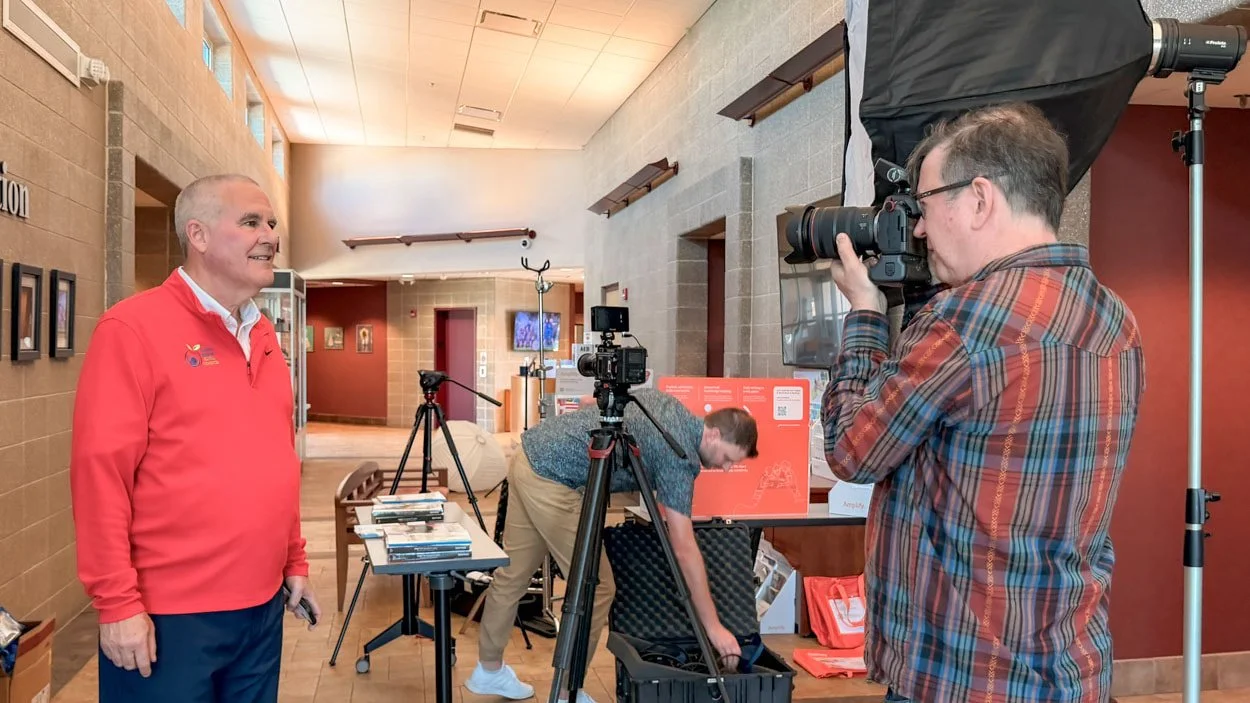
Capturing photography and video together allows everything to feel more consistent and gives a business a complete visual library to use across their website and marketing.
When Everything Is Built Separately
Most businesses don’t approach this as a system.
It usually happens in stages.
A set of photos gets created to update the website.
A video is added later to explain a service.
The website evolves over time as new pieces are added.
Each step makes sense.
But because they weren’t planned together, they don’t always support each other the way they could.
I’ve seen strong photography placed into a website that wasn’t designed to use it well.
I’ve seen video created without a clear role or placement.
And I’ve seen websites that function well, but don’t reflect the quality of the business behind them.
None of these are major problems on their own.
They’re simply signs that the pieces weren’t built as part of the same system.
What Each Piece Actually Does
Each element plays a different role.
Business photography creates clarity.
It shows your team, your environment, and your work. It helps people understand what your business looks like.
Business video creates connection.
It brings personality into the experience. It helps people hear how you communicate and get a sense of who you are.
Your website creates structure.
It’s where everything comes together and how people experience your business.
Individually, each one has value.
Together, they become much more effective.
What Happens When They Work Together
When these pieces are aligned, the experience changes.
Over time, I’ve learned that the businesses that operate most smoothly tend to think in systems. The same applies to how they present themselves visually.
When photography, video, and a website are built to support each other, everything becomes more consistent, more efficient, and easier to maintain.
Your visuals feel consistent.
Your message becomes clearer.
Your website feels more intentional.
People don’t have to work to understand what you do.
They can see it more quickly.
They can feel it more easily.
That clarity builds trust.
And it often leads to better conversations before a project even starts.
What Happens in Practice
Most businesses don’t start with a complete system.
They build it over time.
In some cases, photography comes first, then video is added later. In others, a video is created, but there isn’t a full set of visuals to support it across the website.
I’ve also worked on projects where photography and video are created together, which allows everything to feel more consistent from the start.
None of these approaches are wrong. They just lead to very different outcomes.
Where to Start
You don’t need to do everything at once.
In most cases, the best place to start is with what feels out of step.
That might be your photography.
It might be your website.
Or it might be video, once everything else is in place.
The goal isn’t to create more content.
It’s to bring your content into alignment and build from there.
In some cases, it makes sense to build multiple pieces at the same time. I’ve worked on projects where photography and video are created together over the course of a day or two. This allows everything to feel consistent from the start and gives a business a complete visual library to use across their website, social media, and marketing.
It also simplifies the process. Instead of coordinating separate projects, everything is planned and captured with a single, clear direction.
A Final Thought
Photography, video, and your website aren’t separate efforts.
They’re parts of the same system.
When they’re built to support each other, your business becomes easier to understand, more engaging to experience, and more consistent across everything you do.
It doesn’t require doing everything at once.
It just requires thinking about how the pieces fit together.