
Why Some Projects Need an Assistant
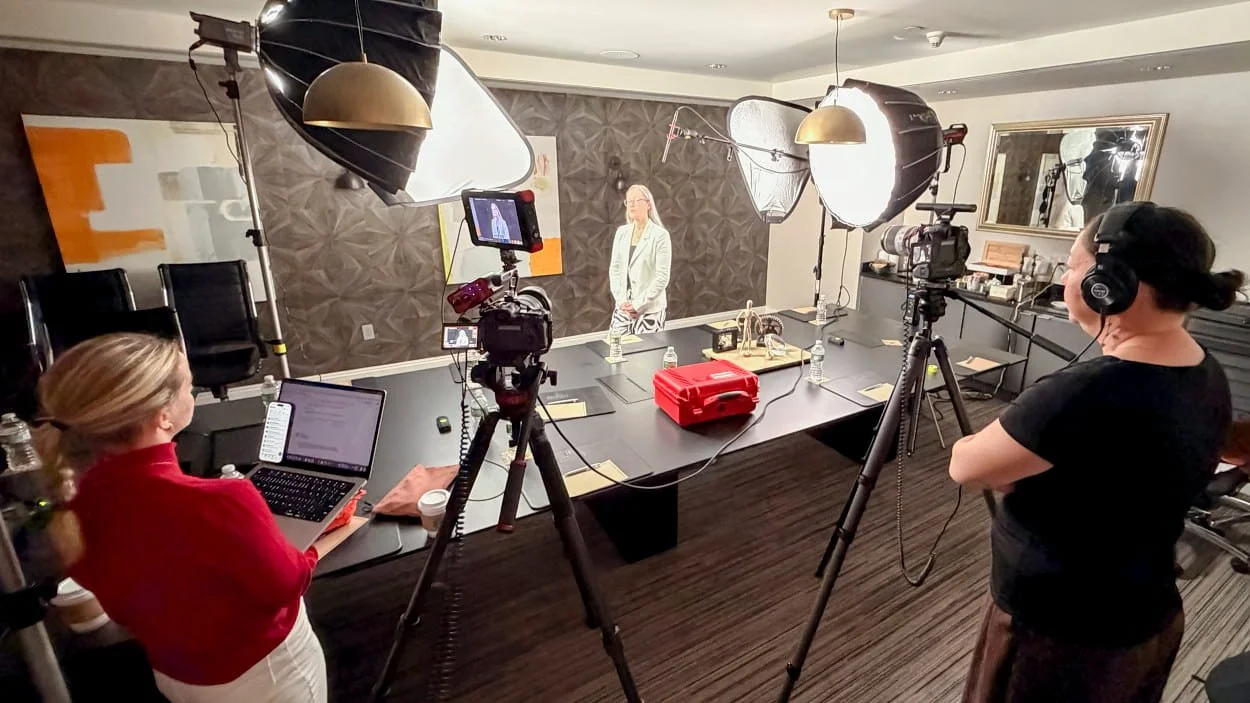
A successful production often involves many moving parts working together behind the scenes.
Every so often, a client asks a reasonable question:
"Do we really need an assistant?"
Sometimes the answer is no.
I've photographed executive headshots, editorial portraits, and smaller projects on my own for years. Not every assignment requires additional crew. But there are also projects where having an assistant makes a significant difference, not just for me, but for the overall success of the production.
The value of a good assistant has very little to do with carrying equipment.
Clients occasionally offer to help carry gear or pack up at the end of a project, which I genuinely appreciate. But an experienced assistant brings something very different to the table.
They understand the workflow. They know where equipment belongs, what tools may be needed next, and how the production is unfolding in real time.
Often, they’re solving problems before they become problems.
In many ways, the best assistants are already thinking one step ahead. They’re anticipating the next lighting change, the next location, the next lens, or the next challenge before it happens.
That’s not simply extra help. That’s production support.
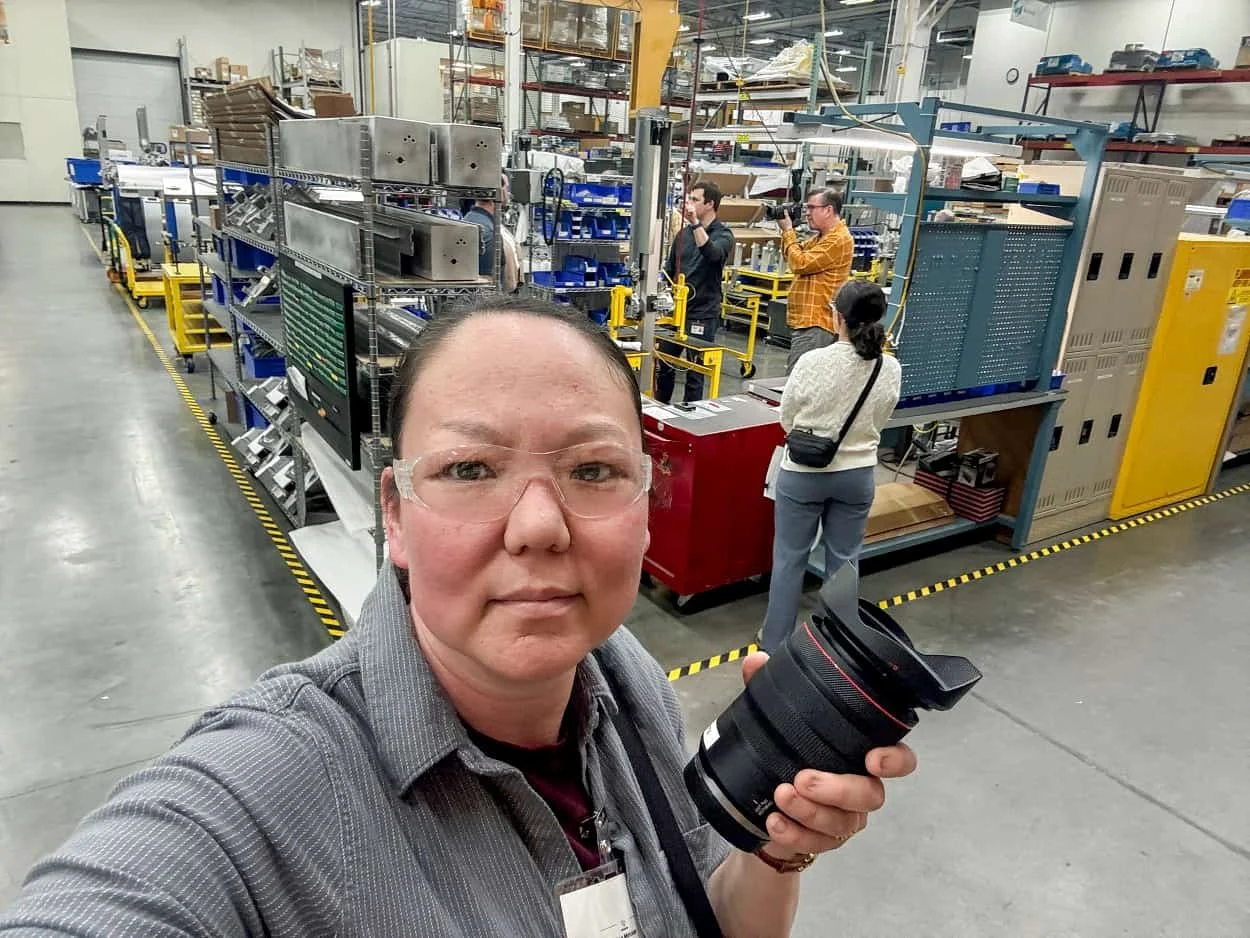
A good assistant is often thinking one step ahead, helping the production stay organized and moving efficiently.
Even small projects are productions. There are schedules to manage, people to coordinate, equipment to move, lighting to adjust, and details to watch. My job is to create strong images and help subjects feel comfortable in front of the camera. The more complex a project becomes, the more important it is to have support that allows me to stay focused on those responsibilities.
One of the biggest benefits of an assistant is having another set of eyes.
When I'm working with a subject, I'm paying attention to expression, posture, composition, lighting, and the conversation happening in front of me. At the same time, an assistant may notice something I haven't.
A flash may not have fired.
A new wrinkle may appear on a blouse.
A tie may have moved slightly out of place.
A distracting object may have found its way into the background.
These are small details, but small details matter.
Recently, I was photographing a group of people and one person's sleeve had rolled up slightly. Neither my assistant nor I noticed it. The client did. The image was corrected before we moved on.
Nobody missed their responsibility.
The system worked.
Multiple people were paying attention, and one of them caught something that improved the final image.
That's one reason I often say that successful productions are team efforts.
The assistant is part of that team. Sometimes the client is part of that team. On larger projects there may be a hair stylist, makeup artists, producers, or additional crew members. Everyone contributes in different ways.
An assistant doesn't replace a stylist. If a project includes a stylist, their responsibility is much more focused on wardrobe, appearance, and presentation. But on projects where a stylist isn't present, everyone tends to become a little more aware of those details. We work together to make sure the final result is as strong as possible.
A good assistant also helps remove friction.
If we're working outdoors and the wind suddenly picks up, they may stabilize a light stand while I continue working with the subject.
If I need to switch lenses, they can have the next lens ready.
If a light needs to move, they can make the adjustment while I stay behind the camera and evaluate the change in real time.
Those small efficiencies add up throughout the day.
After asking one of my assistants, Ling, what she thought clients misunderstood most about the role, her answer was surprisingly simple. She talked about the little things.
Turning lights on and off between setups. Anticipating lens changes. Making sure cameras are ready. Keeping equipment prepared for what’s coming next.
Her point was that those small tasks allow me to stay fully engaged with the person in front of the camera instead of dividing my attention between the subject and the equipment.
I thought that was a great way to describe it.
The assistant isn't just helping move equipment. They're helping protect the flow of the production.
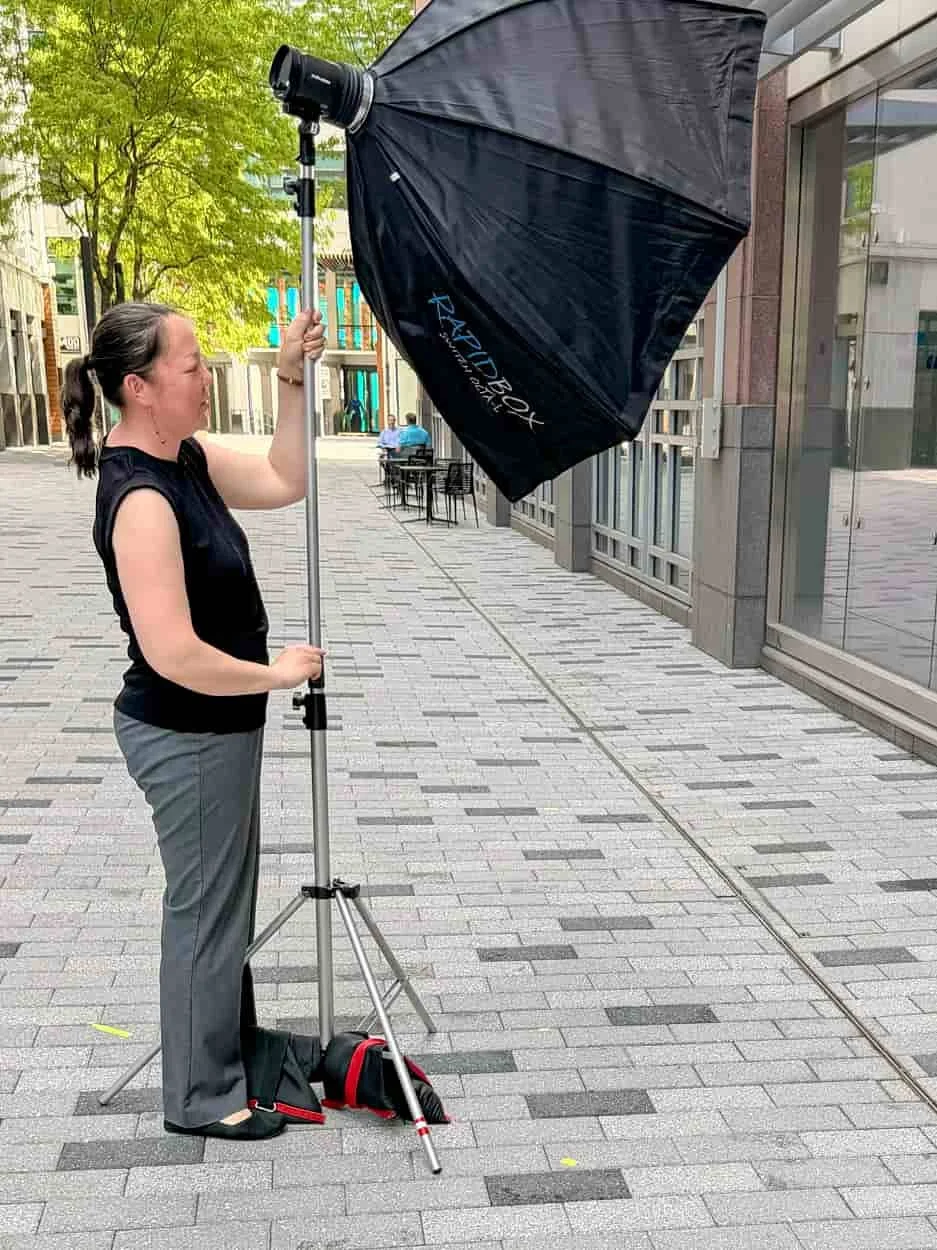
Whether adjusting lighting, anticipating the next setup, or solving small problems before they become bigger ones, assistants help remove friction throughout the day.
Years ago, I was photographing the president of a Federal Reserve Bank of Kansas City. We had completed our planning, received approvals, and scouted the location in advance. Everything was ready.
Then, when we arrived for the portrait, the subject decided he no longer wanted to be photographed in the location we had planned.
These things happen.
While I was discussing alternatives with him, my assistant already understood what was unfolding. Before the conversation was finished, he had begun preparing a second location we had identified during planning as a backup option.
By the time I finished speaking with the subject and we agreed on a new direction, much of the setup was already underway.
What could have become a stressful situation turned into a smooth adjustment, much like my experience photographing President Clinton’s departure from Topeka, Kansas.
That wasn't because of equipment.
It was because there was another experienced person helping solve problems in real time.
What begins as a simple assignment can quickly evolve into something much larger.
Earlier this year, a project originally planned as a simple event assignment expanded significantly as planning progressed. What started as straightforward half-day coverage evolved into a much larger production involving a magazine advertisement, executive portraits, facility imagery, event coverage, a ribbon cutting ceremony, and additional storytelling opportunities.
The project itself wasn’t becoming difficult.
It was becoming more complex.
Throughout the day, we were constantly moving between different types of photography. One moment we were building a controlled lighting setup for advertising imagery. The next we were covering speakers and guests during the ribbon cutting. Then we were moving through the facility creating environmental portraits and documenting the people behind the operation.
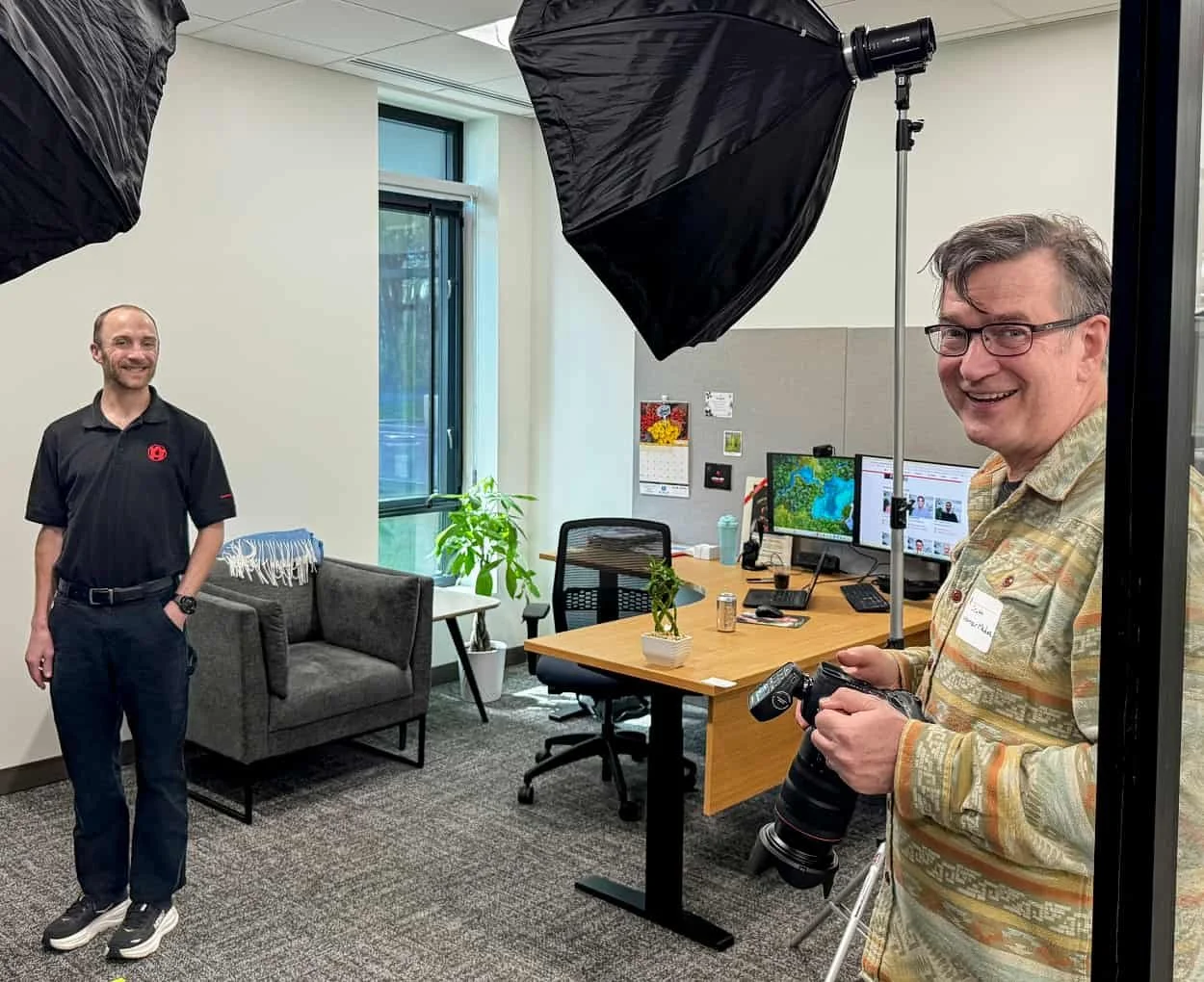
Support behind the camera allows me to stay focused on the person in front of it.
The assistant allowed us to move lighting between locations, prepare setups while I was working elsewhere, and keep the production moving without sacrificing quality. Instead of stopping to break down and rebuild every setup myself, I was able to stay focused on the people, the images, and the moments unfolding in front of me.
A project that originally seems straightforward may expand to include additional subjects, environmental portraits, executive photography, event coverage, facility tours, or changing schedules. As the complexity grows, the value of having support grows with it.
The assistant helps keep the production moving.
They help move lighting between locations.
They help set up the next scene while I'm finishing the current one.
They help make sure details don't get overlooked.
Most importantly, they allow me to focus my attention where it creates the most value.
Creating images. Connecting with people. Solving creative problems. Telling stories.
That's ultimately what clients are hiring me to do.
Occasionally I'll recommend an assistant even when I believe I could complete the project on my own. Experience has taught me that productions don't always unfold exactly as planned. Schedules change. Opportunities appear. Priorities shift.
Having the right support in place creates flexibility.
And flexibility often leads to better results.
The funny thing is that when an assistant does their job exceptionally well, most people never notice.
The lights are where they need to be.
The schedule stays on track.
The equipment is ready.
The details are handled.
The production simply works.
And that's exactly the point.