
Using a Video Teleprompter to Deliver Your Message
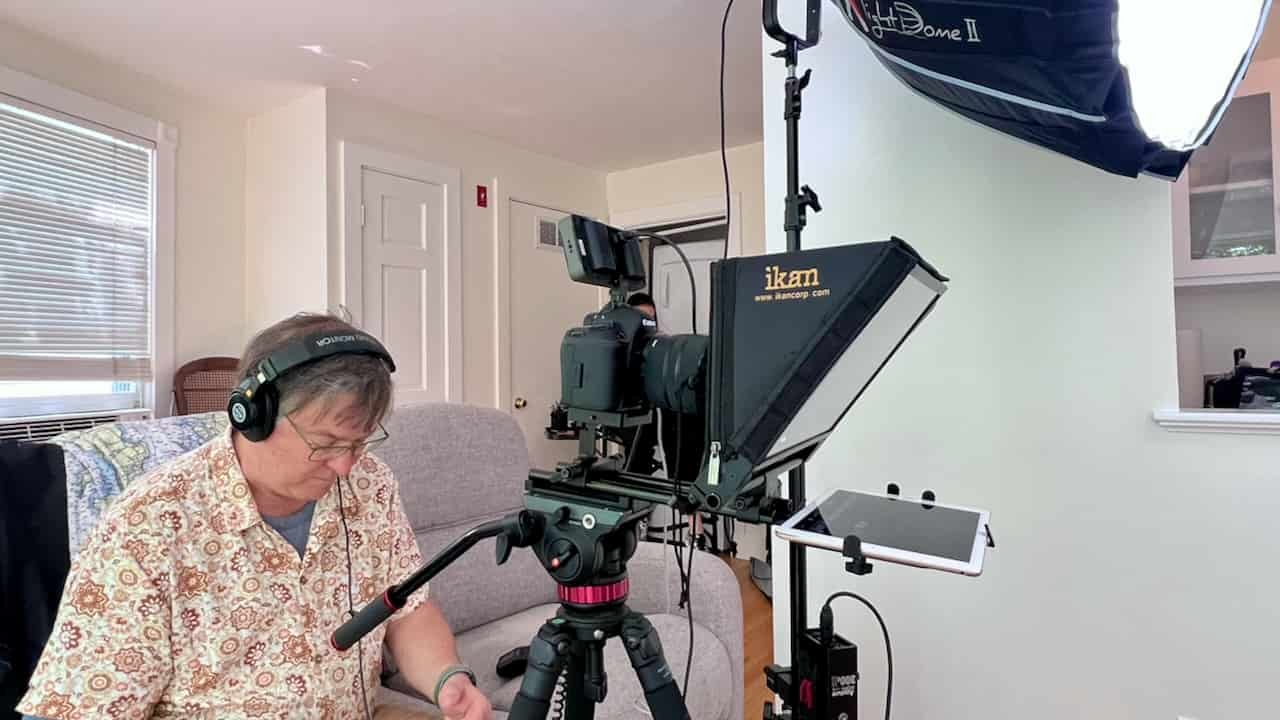
A behind-the-scenes look at a teleprompter setup used for clear, confident on-camera messaging.
Coming from a photojournalistic background, I have always enjoyed creating heartfelt videos and photography that allow people to speak from the heart and share human-centered stories.
I prefer an approach that feels more like a conversation than a formal interview. While questions may be shared in advance, the dialogue itself stays short, natural, and spoken in the moment. Typically, the individual is not looking directly into the camera. This technique helps create a more authentic connection, as the message feels lived rather than read.
There are times, however, when speaking directly to the camera is essential, especially in professional video production where clarity and consistency matter. This is especially true when delivering structured content, educational material, or longer-form messaging where clarity and consistency matter.
This is where a teleprompter becomes an effective tool.
The teleprompter I use displays a prepared script on an iPad and reflects it onto a piece of glass positioned directly in front of the camera lens. This allows the speaker to read their message while maintaining direct eye contact with the viewer, creating a sense of connection without sacrificing accuracy.
Using a teleprompter also allows the speaker to write and refine their message in advance. Practicing with a voice recorder before filming helps evaluate pacing, tone, and clarity. This preparation makes it easier to fine-tune content and ensure the final video stays on topic, especially for longer recordings.
During production, having a prepared script visible through the teleprompter gives the speaker confidence. It ensures that key points are covered while still allowing the delivery to feel natural and composed.
Both approaches, speaking conversationally without a teleprompter or delivering a prepared message with one, serve an important purpose. The right choice depends on the message being shared and the audience it is intended for. The goal is always the same: clear communication and an authentic connection with the viewer.